
Let’s talk about something that keeps business owners up at night: finding the right people.
You know the feeling. You need someone who can do the job, do it well, and actually stick around long enough to make a real impact. But when you’re operating in industries like drilling, energy, or construction, especially across Africa, the stakes are even higher. One wrong hire can mean costly delays, safety risks, or projects that stall before they even begin.
This isn’t just about filling a position. It’s about powering Africa’s workforce with people who understand the work, fit your culture, and can hit the ground running. And honestly? That’s hard to do on your own.
The Numbers Don’t Lie: Africa’s Talent Crisis Is Real
Here’s the truth: your team is your biggest asset. The right engineer can solve problems you didn’t even know you had. The right project manager can turn chaos into order. And the right field operator can keep things running smoothly when everything else feels uncertain.
But the numbers tell a sobering story. Nearly three in four employers worldwide report difficulty finding the skilled talent they need in 2025, according to ManpowerGroup’s latest Talent Shortage Survey, that’s double what it was just a decade ago. In South Africa specifically, 38% of companies now say they can’t find suitable engineers, up from under a quarter just a year ago.
For industries like drilling, energy, and construction, these aren’t just statistics, they’re daily operational realities that can make or break projects worth billions. Research shows that 85% of professionals and hiring managers believe there’s a skills shortage within the African oil and gas sector, affecting every level from entry positions to senior engineers.
Why Powering Africa’s Workforce Has Become So Challenging
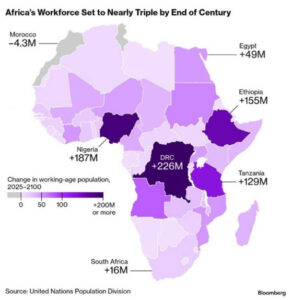
The challenge runs deeper than simple supply and demand. According to UN Population Division / World Bank demographic projections, Sub-Saharan Africa’s population is expected to rise by 79% over the next 30 years to reach 2.2 billion people, a demographic dividend that should mean plenty of workers. So why the shortage?
Many African countries have strict local content rules requiring an average of 80% of the workforce to be hired locally, yet the homegrown talent pool in emerging oil and gas markets is still developing. The skills gap is particularly acute in specialized sectors. You’re not just looking for warm bodies, you need people who are technically skilled, adaptable, culturally aware, and ready for the unique challenges that come with working in emerging markets.
In technology roles, ICT specialists now make up 22% of all reported shortages in South Africa, up sharply from just 10% two years ago. The most in-demand roles include data scientists, software engineers, and cybersecurity professionals, exactly the kinds of specialized skills drilling and energy companies increasingly need.
The Real Cost of Getting It Wrong
Let’s put this in perspective. Drilling operations aren’t just expensive, they’re extraordinarily expensive. Daily rig rental costs can easily exceed $500,000, and in some cases reach over $1 million per day. When skilled personnel aren’t available to handle production and operations processes, every day of delay translates directly into massive financial losses.
Beyond the immediate costs, projects can stall entirely, contracts get renegotiated, and investor confidence wavers. Notable skills shortages affect Ghana, Kenya, Mozambique, and Uganda where several major projects are underway. When operators can’t find the right talent, multi-billion dollar developments sit idle.
The situation is getting more urgent, not better. The percentage of companies struggling to hire artisans, electricians, millwrights, and automation technicians, has doubled from 10% to 22% in just one year. These aren’t office jobs; these are the skilled tradespeople who keep operations running.

Meet SPETIV Consulting: Powering Africa’s Workforce From the Ground Up
Based in Cameroon, SPETIV Consulting has built its reputation on one simple idea: matching the right talent with the right opportunity, no compromises.
We’re not your typical recruitment agency that throws resumes at you and hopes something sticks. Instead, we take the time to understand your business, your industry, and what you actually need, not just on paper, but in practice.
Whether you’re a multinational company expanding into new African markets or a local business scaling up, SPETIV focuses on powering Africa’s workforce by connecting you with professionals who are ready to contribute from day one. We work across Central, West, and East Africa, which means we have access to diverse talent pools and understand the nuances of hiring across different regions.
What Makes Our Approach to Powering Africa’s Workforce Different?
Let’s break down why companies trust us with something as critical as building their teams:
We know our industry inside and out. SPETIV specializes in high-stakes sectors like drilling, mining, construction, and energy. We’re not generalists trying to figure it out as we go, we already speak your language. Need a geotechnical engineer? A rig operator? Someone who understands offshore safety protocols? We know where to look and what to look for.
Every candidate is thoroughly vetted. This isn’t about sending you a stack of CVs and wishing you luck. SPETIV puts candidates through a rigorous process: technical screening, behavioral assessments, reference checks. We are not just checking boxes, we are making sure the person is technically qualified and a good fit for your team culture. That’s what powering Africa’s workforce with precision looks like.
We understand local content requirements. With most African oil and gas operations requiring 80% local workforce participation, SPETIV knows how to navigate these regulations while still delivering internationally-qualified talent. We bridge the gap between regulatory compliance and operational excellence.
We move fast when you need us to. In industries like drilling, downtime is expensive. SPETIV understands that. Our consultants work closely with clients to deliver talent quickly without cutting corners, so you can keep your operations running smoothly.
We think beyond just filling a role. SPETIV isn’t just about plugging gaps. We’re about building teams that work. That means understanding your long-term goals, not just your immediate needs, because powering Africa’s workforce is a marathon, not a sprint.
Why Drilling Companies Trust Us
Drilling operations are some of the most demanding environments you can work in. You need people who are technically sharp, safety-conscious, and able to perform under pressure. There’s no room for error.
Africa has seen remarkable growth in drilling activity, with over 1,100 wells expected to be drilled both onshore and offshore in 2024, comparable to pre-COVID levels. Countries like Uganda’s Tilenga project could potentially see more than 400 wells drilled, while Kenya’s South Lokichar Phase 1 represents another major development.
SPETIV has earned trust in this space because we supply professionals who meet international standards and can handle the challenges that come with the job, whether it’s offshore exploration or land-based development. We understand that powering Africa’s workforce in these industries means your team needs to be as reliable as your equipment.
Powering Africa’s Workforce Is More Than Just Recruitment
What really sets SPETIV apart is that we see ourselves as strategic partners in powering Africa’s workforce, not just a vendor you call when you’re short-staffed.
Beyond recruitment, we offer:
- Executive search and headhunting for senior leadership roles who can navigate Africa’s complex business environment
- Contract staffing for project-based needs, perfect for the boom-and-bust nature of drilling operations
- Workforce planning and HR advisory to help you think ahead and avoid talent crunches
- Training and upskilling programs to develop your team over time and meet local content requirements
In other words, we’re in it for the long haul. We want to help you build a workforce that grows with your business and contributes to powering Africa’s workforce as a whole.
The Future of Work in Africa Demands Better Solutions
The ManpowerGroup Talent Shortage Survey 2025 shows that, almost half of Sub-Saharan African employers see talent availability improving between 2025-2030, compared with just 29% globally. This optimism is grounded in Africa’s young, growing population. But optimism alone won’t fill your critical positions today.
Up to 29.8 million more project professionals will be needed globally by 2035, with fastest growth in South Asia, Sub-Saharan Africa, and China, fueled by infrastructure investment and digital innovation. The opportunity is massive, but only for companies that can access and develop this talent effectively.
The Bottom Line on Powering Africa’s Workforce
Finding the right talent in Africa’s business landscape isn’t easy. But it’s also not impossible, especially when you have a partner who understands the terrain, knows the talent, and is committed to getting it right.
If you’re tired of hiring processes that drag on forever, candidates who don’t work out, or feeling like you’re constantly starting over, maybe it’s time to work with someone who’s dedicated to powering Africa’s workforce differently.
SPETIV Consulting has built its reputation on precision, expertise, and results. We’re not perfect, no one is, but we are serious about connecting businesses with the people who can actually move the needle and contribute to powering Africa’s workforce in meaningful ways.
If that sounds like what you need, reach out to us at [email protected] and see how we can help you build the team your business deserves.
Because at the end of the day, powering Africa’s workforce starts with the people you bring on board. And finding those people? That’s where it all begins.